
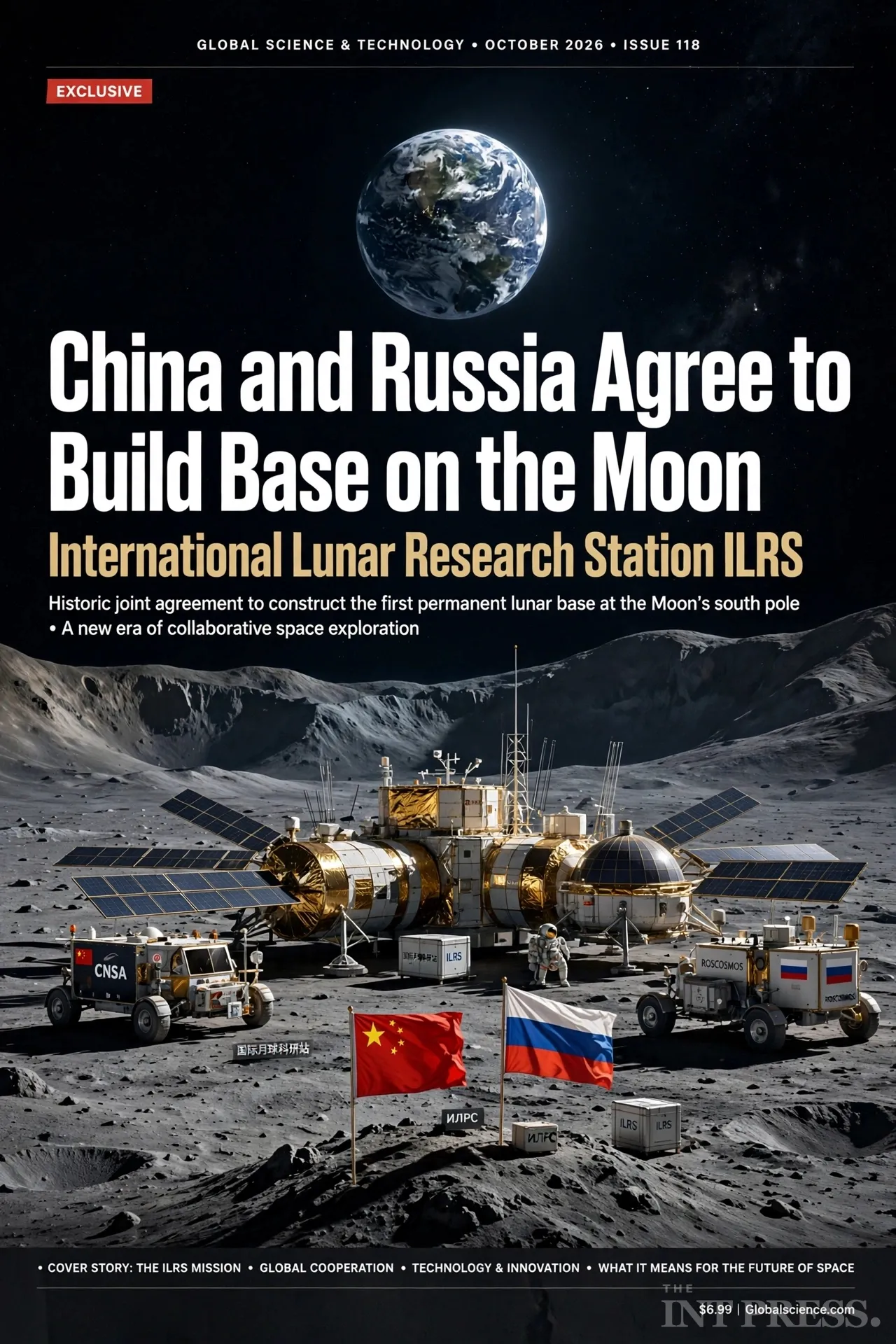
With the dream of having a permanent base on the Moon getting nearer, China and Russia are working together on an ambitious space project to create the International Lunar Research Station (ILRS). This will provide opportunities for scientists to conduct research, experiment with new technology and get ready for further missions on the Moon. While this partnership is an exciting step to explore space, it will take years of planning and investment to create a functional lunar base.
New Era of Lunar Research
China and Russia officially announced their partnership to create the International Lunar Research Station in March 2021. They signed an agreement with their respective space agencies (China National Space Administration and Roscosmos) to plan, design, create and manage the base together. The base will provide an opportunity for peaceful scientific research on the Moon.
This base will consist of several research facilities that could be located on the Moon or in orbit around it. It will allow scientists to study the geology of the Moon, research resources on the Moon and conduct experiments.
Since this base will be based on the Moon, it will have to withstand extremely harsh conditions. This includes large temperature changes, no breathable air, and exposure to radiation and micro-meteorites. Therefore, engineers will need to create functional machinery to provide power, communication, transport and protection.
Reasons Why China and Russia Want to Create a Lunar Base
The main objective of this partnership is to increase our understanding of the Moon. Scientists can study the Moon rocks, minerals and geology to gain more information about how the Earth-Moon system formed early in its history and how our solar system came to be.
The Moon could provide opportunities to trial new technology which could help missions to Mars and beyond. With the creation of machinery that can survive lunar conditions, scientists can gain an understanding of how they can keep their infrastructure running far away from Earth.
Researchers are interested in the water ice that may be found in permanently shadowed areas at the poles of the Moon. If this can be mined and proven to be economic for future missions, it could be processed into drinking water, oxygen and rocket fuel based on hydrogen. However, this would require further research.
Being on the Moon for an extended period of time could provide opportunities for astronomers, material scientists and experimentation that would be difficult to complete on Earth.
Nuclear Energy Could Play a Major Role

One of the biggest challenges for having a permanent base on the Moon is providing a consistent source of power. While solar panels can be used to provide energy, there are areas on the Moon that do not receive sunlight for long periods of time. There may be areas close to the poles that would have good lighting conditions; however, this will depend on where exactly the base will be located.
In May 2025, China and Russia signed an agreement to work together on creating a nuclear power plant for their lunar research station. This would provide a more consistent source of energy for scientific research, communication, heating and other crucial equipment.
Creating this will pose some engineering challenges. Any nuclear reactor on the Moon will need to be safely transported, and function well in the lunar environment. While this agreement shows progress, it does not mean that they currently have a working nuclear power station on the Moon.
When Will the Lunar Station Be Created?
This project is aimed to be completed in stages. Initially, robotic missions will be sent to investigate, trial technology and deliver equipment. Eventually, missions will begin to set up crucial infrastructure.

China has announced they want to send astronauts to the Moon prior to 2030. The overall lunar research station project will aim to have a simple base set up near the south pole of the Moon around 2035. The International Lunar Research Station will also continue to develop throughout the next few decades.
These timescales are just targets. Space projects often face delays due to technical issues, lack of funding, launch dates and changing requirements. Having a permanent human presence will be much more complex.
China and Russia have also mentioned wanting to involve other countries. This could provide additional scientific equipment, knowledge and funding.
Challenges and International Competition
There are several challenges to this project. Sending heavy equipment to the Moon can be costly, and all missions will present risks during launch, landing and operating in harsh environments. Scientists will need to create ways to protect their equipment (and eventually humans) from radiation and extreme temperatures.
This project is also happening alongside other international lunar research projects such as NASA's Artemis project. While these have similar scientific goals, they will be working with different countries, have different timelines and future goals. How this project develops will likely impact how we explore space in the future.
It will also be important to work internationally. As we are going to be doing things on the Moon, it raises questions about safety, using resources, scientific research and peaceful exploration of outer space. Clearly defined agreements will be needed.
Conclusion
The International Lunar Research Station that China and Russia want to create is an ambitious project to increase our presence in space. The objectives of this project are to increase our scientific knowledge, trial new technology, research resources on the Moon and create infrastructure.
This project will take a long time to complete, and many of the hardest parts of this project still need to be proven on the Moon. A successful lunar base will need a consistent energy source, advanced robotics, reliable transport and ongoing international and financial support.
If this project is carried out with the general objectives in mind, it could provide a crucial research base for the Moon and prepare us for future missions further into space. While this agreement shows a serious commitment to lunar research, it does not mean we will have a fully functional human base soon. How quickly this ambitious project can be turned from planning to reality will depend on the next few years.





Responses (0)
Sign in to share your thoughts.
Sign in