
Netanyahu Falls Short of Majority as Israel Faces Political Uncertainty
Israel's latest election has left Prime Minister Benjamin Netanyahu facing a difficult political challenge.
His party remains the largest in parliament, but his political allies have failed to secure enough seats to form a government on their own.
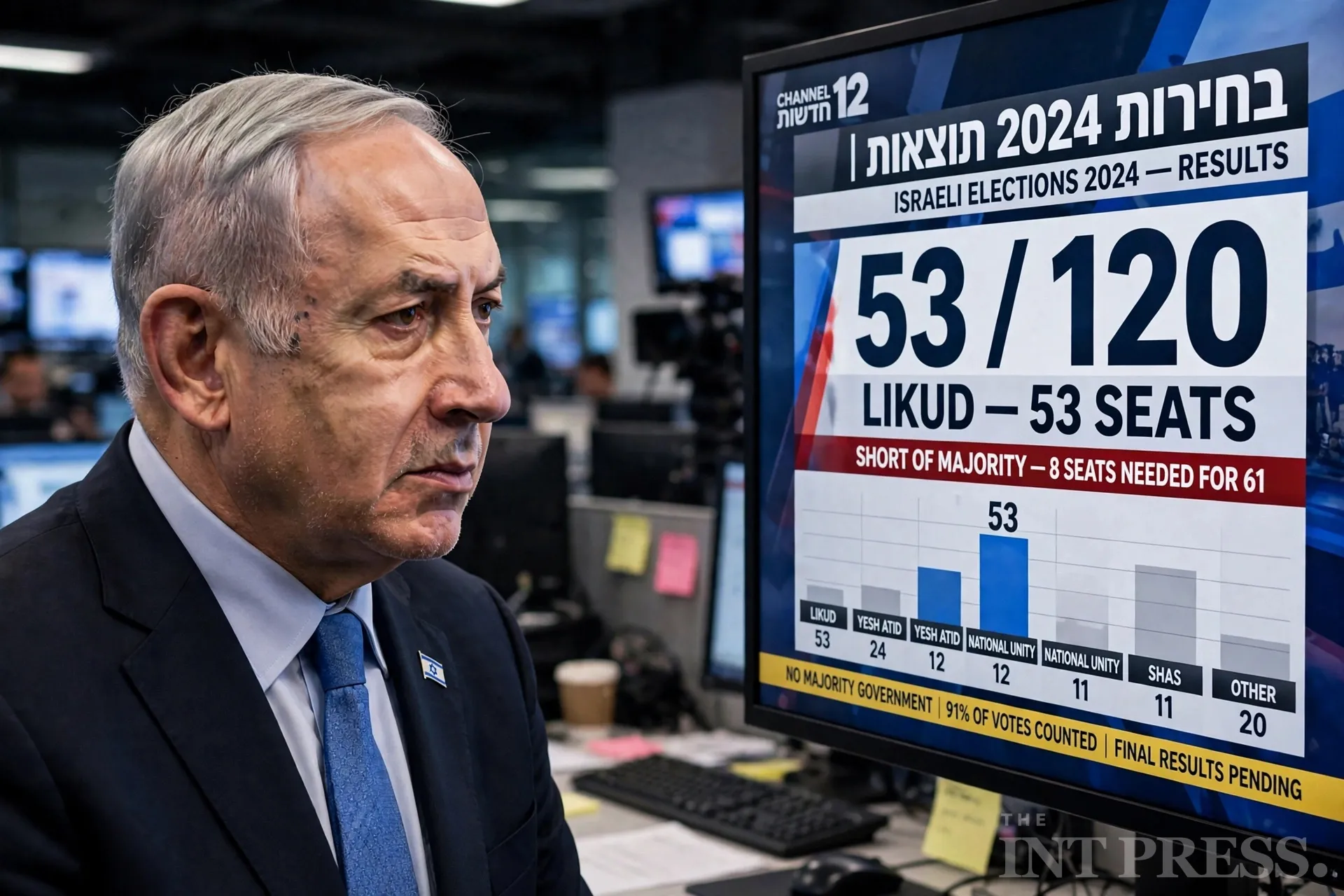
The results became clear after Israel's October 27, 2026 election. The final count showed that Netanyahu's bloc had won 53 seats in the 120-member parliament, known as the Knesset. The opposition bloc secured 48 seats.
Neither side reached the 61 seats needed for a parliamentary majority.
That leaves Israel facing an uncertain political future. Netanyahu is not out of the picture, but forming his next government could be much harder than he hoped.
Netanyahu's Party Remains the Largest
Netanyahu's Likud party finished as the biggest individual party, winning 27 seats.
That gives him an important position in the negotiations ahead.
But being the largest party does not automatically mean winning the right to govern.
Israel uses a parliamentary system, where parties usually need to join forces to form a government.
A party can win the most seats and still struggle to find enough partners to reach a majority.
That is the problem Netanyahu now faces.
His right-wing and religious allies have fewer seats than they held before the election.
Meanwhile, opposition parties are looking for a way to work together and replace him.
The final outcome will depend on which parties can agree on a common plan.
Opposition Parties See an Opportunity
The opposition bloc, led by Gadi Eisenkot's Yashar party, won 48 seats. Although that is not enough to form a government alone, the opposition may have another option.
Two Arab-led political groups won a combined 19 seats, giving them a potentially decisive role in deciding who governs Israel.
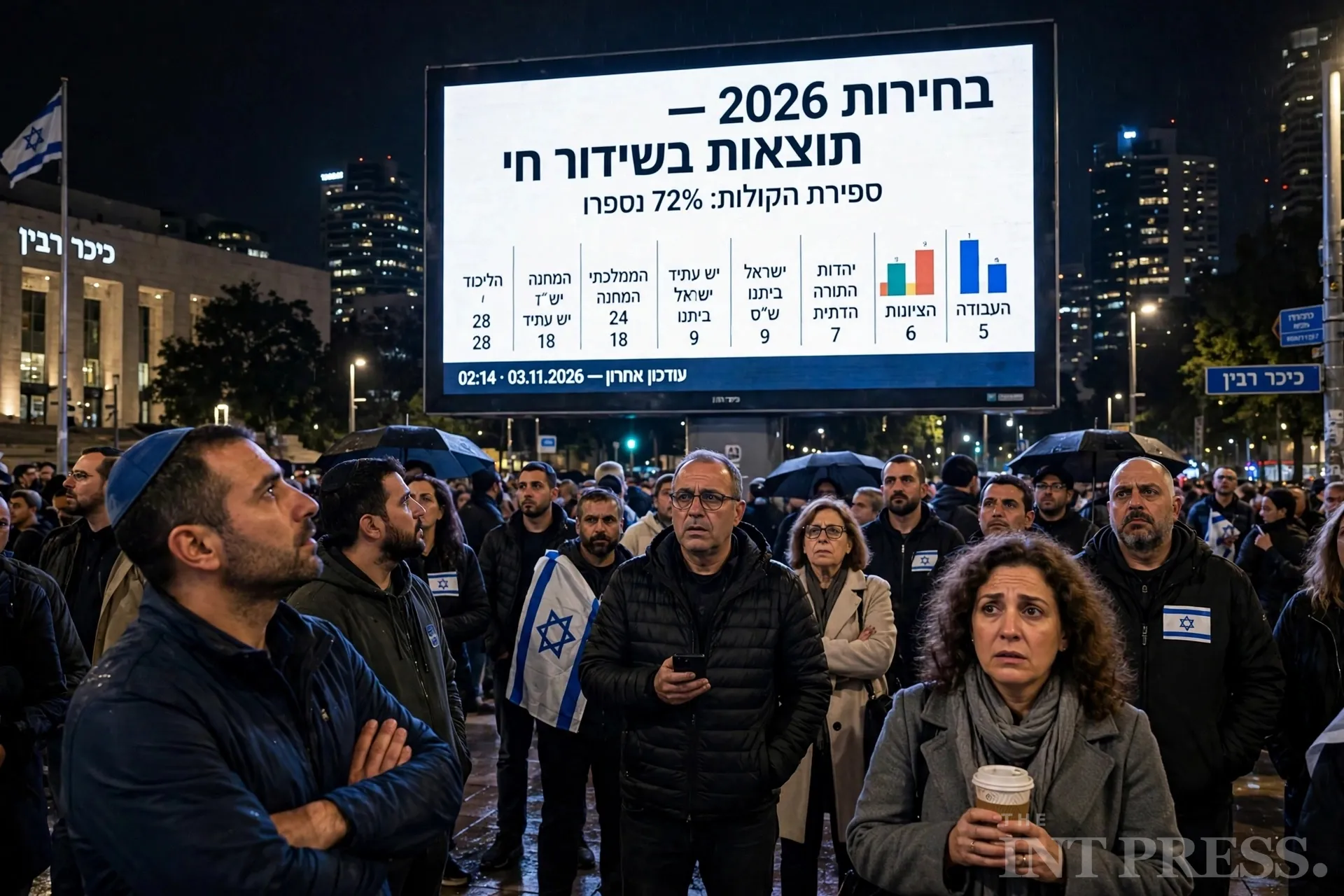
Together, the opposition bloc and these parties have enough seats to create a parliamentary majority on paper.
However, turning those numbers into a functioning government will not be easy.
Some opposition politicians may be uncomfortable relying on Arab-led parties for support.
The groups themselves may also have conditions about the policies of any government they help establish.
Still, their election results have made them important players in the next stage of Israeli politics.
Why Did the Results Matter?
This election comes after years of political division and serious security challenges.
Netanyahu has faced criticism over the security failures surrounding the Hamas-led attacks of October 7, 2023, as well as his government's handling of the war in Gaza.
Disagreements over military service exemptions for ultra-Orthodox Jewish men have also created tension within Israeli politics.

These issues helped shape the political debate during the campaign.
At the same time, Netanyahu's supporters point to his security policies and military actions as reasons to keep him in office.
The election results show that Israeli voters remain divided. Netanyahu's bloc is still a major political force, but it no longer has the parliamentary numbers it previously held.
The strong performance of Arab-led parties was another important development.
Their combined 19 seats could give them greater influence over decisions about the next government.
Disputes Over the Election Results
The political tension did not end when voting finished.
Netanyahu's Likud party raised allegations of voting irregularities and claimed that the election had been stolen through misconduct involving Arab-led parties.
These claims have not been established as fact.
Israeli election officials said the integrity of voting at polling stations had been maintained.
Reports also said police rejected claims of widespread voting irregularities.
The allegations have added another layer of uncertainty to an already complicated political situation.
Opposition leaders have accused Netanyahu and his party of trying to undermine confidence in the results.
Netanyahu's allies, meanwhile, have called for suspected irregularities to be investigated.
Any allegations must be examined through the proper legal process, rather than treated as proof of wrongdoing.
What Happens Next?
Netanyahu will remain caretaker prime minister while the process of forming a new government moves forward.
President Isaac Herzog is expected to consult party leaders after the official results are released and decide whom to ask to form a government.
Several possibilities remain. Netanyahu could try to attract lawmakers from outside his current bloc. The opposition could attempt to form a government with support from Arab-led parties.
Another possibility is a broader unity government involving political rivals.
If the parties cannot reach an agreement, Israel could eventually face another election.
For now, no final decision has been made about who will lead the next government.
A Difficult Road Ahead
Netanyahu's failure to secure a majority marks an important moment in Israeli politics, but it does not automatically end his time in office.
His party remains the largest, and he still has possible routes to forming a government.
However, he will need to negotiate with other political figures or find new sources of parliamentary support.
The opposition faces its own challenge: bringing together parties with different priorities and reaching an agreement that can last.
The coming weeks could prove crucial for Israel's political future.
One thing is clear: the election has changed the balance of power in parliament. Whether that change leads to a new government, a broad political agreement or another election will depend on what happens next.




Responses (0)
Sign in to share your thoughts.
Sign in